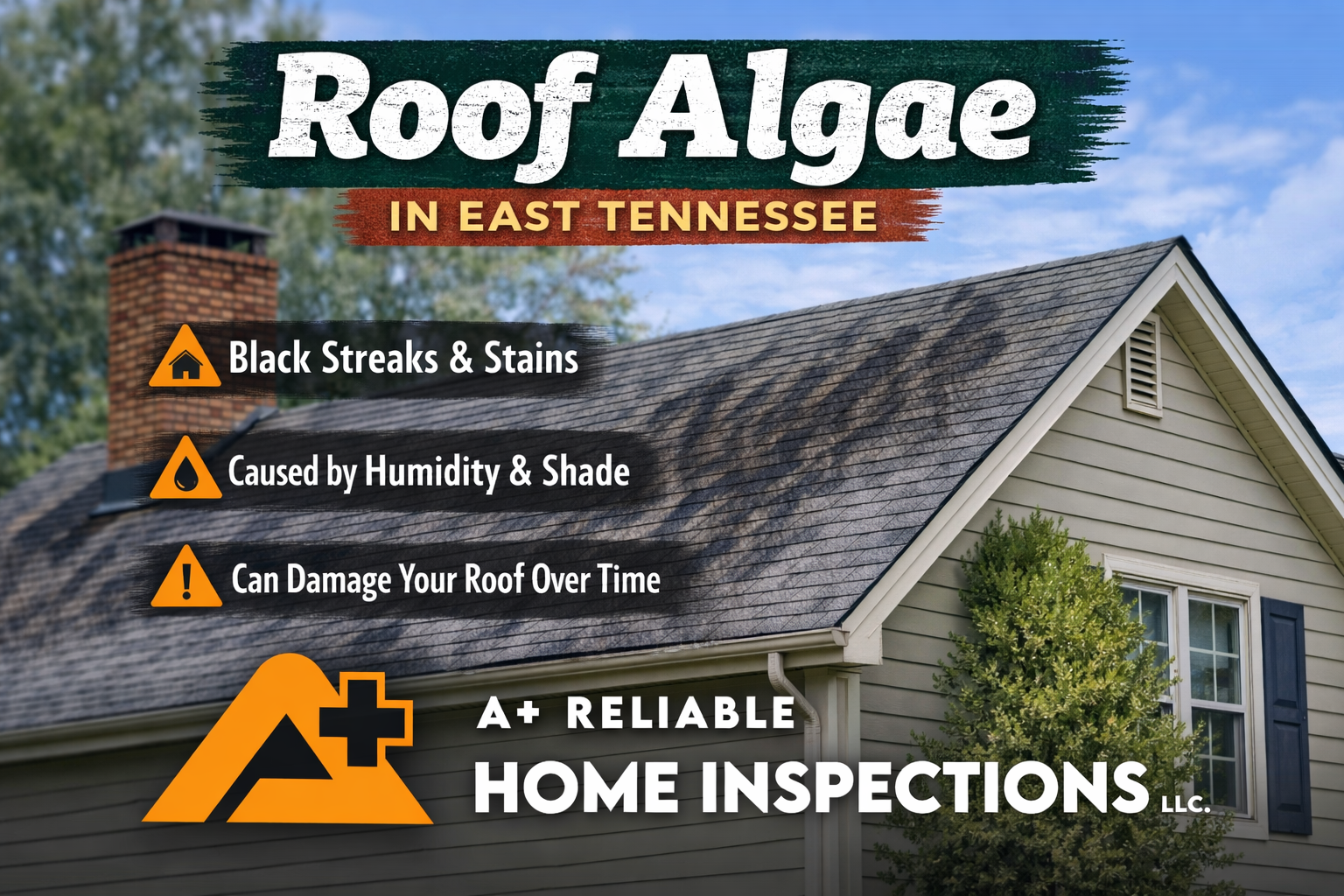
In East Tennessee, your roof deals with high humidity, frequent rainfall, shaded lots, and long warm seasons. Over time, these conditions can lead to dark streaks, green growth, or discoloration on roofing shingles.
Many homeowners in Knoxville, Farragut, Powell, Maryville, and Oak Ridge assume these streaks are mold. In most cases, however, it is roof algae.
At A+ Home Inspections, roof staining is one of the most common exterior conditions we document during a Knoxville home inspection.
Let’s break down what roof algae in East TN looks like and what you can do about it.
What Does Roof Algae Look Like?
Roof algae most commonly appears as:
-
Black streaks running down asphalt shingles
-
Dark staining on north-facing slopes
-
Green patches in shaded areas
-
Circular crusty growths (lichen)
-
Moss spreading between shingles
The most common culprit is Gloeocapsa magma, a blue-green algae that feeds on the limestone filler in asphalt shingles. As it matures, it creates the dark streaking often seen across rooftops throughout Knoxville neighborhoods.
While algae begins as a cosmetic issue, it can contribute to premature aging of shingles if left unaddressed in our humid East Tennessee climate.
Why Roof Algae Is So Common in Knoxville & East Tennessee
Roof algae thrives in:
-
High humidity
-
Warm temperatures
-
Shaded rooflines
-
Poor ventilation
-
Clogged gutters
-
Areas beneath overhanging trees
Homes in wooded areas around Knoxville are especially prone to algae growth because reduced sunlight allows moisture to remain on shingles longer after rainfall.
Roof Algae vs. Moss vs. Mold
Understanding the difference matters during a professional home inspection.
Roof Algae
-
Black streaking
-
Primarily cosmetic at first
-
Very common in humid climates
Moss
-
Thick, green, sponge-like growth
-
Lifts shingles
-
Traps moisture and accelerates deterioration
Lichen
-
Crusty circular patches
-
Roots into shingles
-
Can permanently scar roofing materials
Mold
-
Often associated with trapped moisture
-
May indicate ventilation or leak concerns
-
Potential health issue
During an East Tennessee home inspection, we determine whether staining is cosmetic algae or a condition affecting roof integrity.
8 Ways Roof Algae Can Affect Your Home
-
Reduced curb appeal
-
Lower resale value
-
Accelerated shingle wear
-
Increased moisture retention
-
Wood rot risk
-
Mold development
-
Spread to sheds or nearby structures
-
Shortened roof lifespan
In Knoxville’s humid environment, moisture control is critical. Algae interferes with how effectively your roof dries after storms.
How to Prevent Roof Algae in East TN
Prevention is far more effective than repeated cleaning.
Improve Roof Conditions
-
Trim back overhanging tree branches
-
Maintain clean, functional gutters
-
Improve attic ventilation
-
Ensure proper drainage away from the roof
-
Address standing water issues
Install Copper or Zinc Strips (Long-Term Solution)
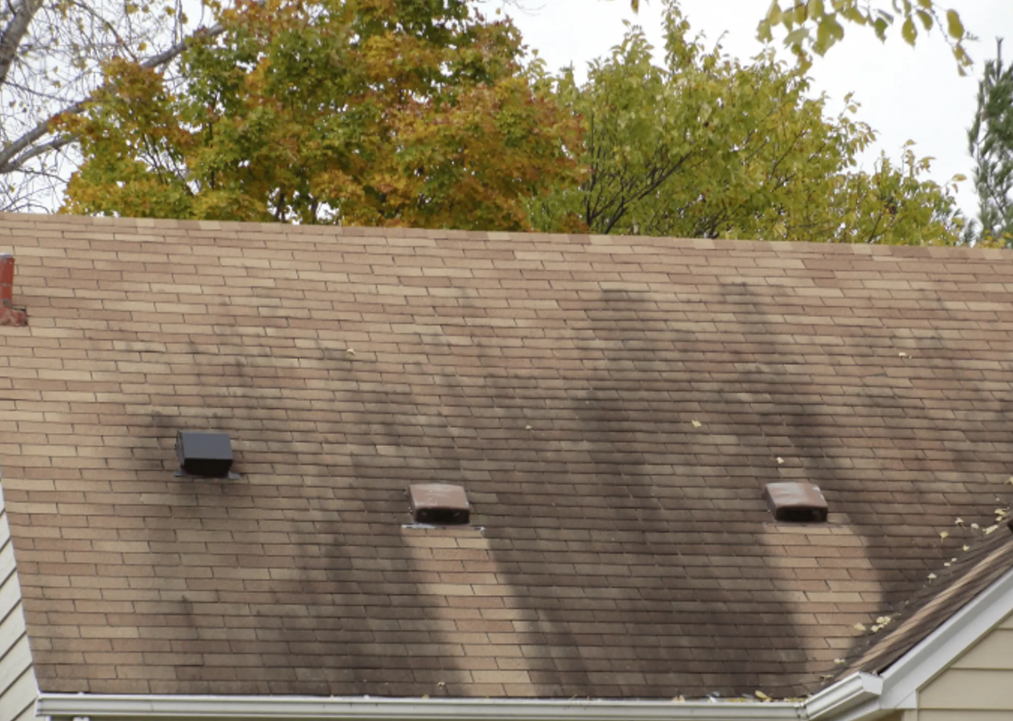
You may notice that shingles near copper flashing or metal components (like around chimneys or skylights) often remain free of algae. That’s because rainwater washing over those metals carries trace amounts of copper or zinc, which inhibit algae growth.
A similar preventative solution can be created by installing copper or zinc strips along the ridge of the roof.
When rainwater flows over these strips, it distributes microscopic metal particles down the roof surface, creating an environment that discourages algae growth.
For best results:
-
Use strips 6–7 inches wide
-
Typically 10 feet long sections
-
Fasten with low-profile ring-shank nails or screws made of compatible metal
When properly installed, this method can significantly reduce future algae recurrence — particularly helpful in East Tennessee’s damp climate.
Choose Algae-Resistant Shingles
If roof replacement is being considered, algae-resistant shingles are an excellent option.
Many manufacturers produce shingles with embedded metal granules that provide the same effect as copper or zinc strips. Brands offering algae-resistant shingles include:
-
Owens Corning
-
CertainTeed
-
GAF
These shingles typically cost slightly more per square foot but often provide 10+ years of algae resistance — a worthwhile investment for homeowners in Knoxville and surrounding East Tennessee communities.
How to Remove Roof Algae Safely
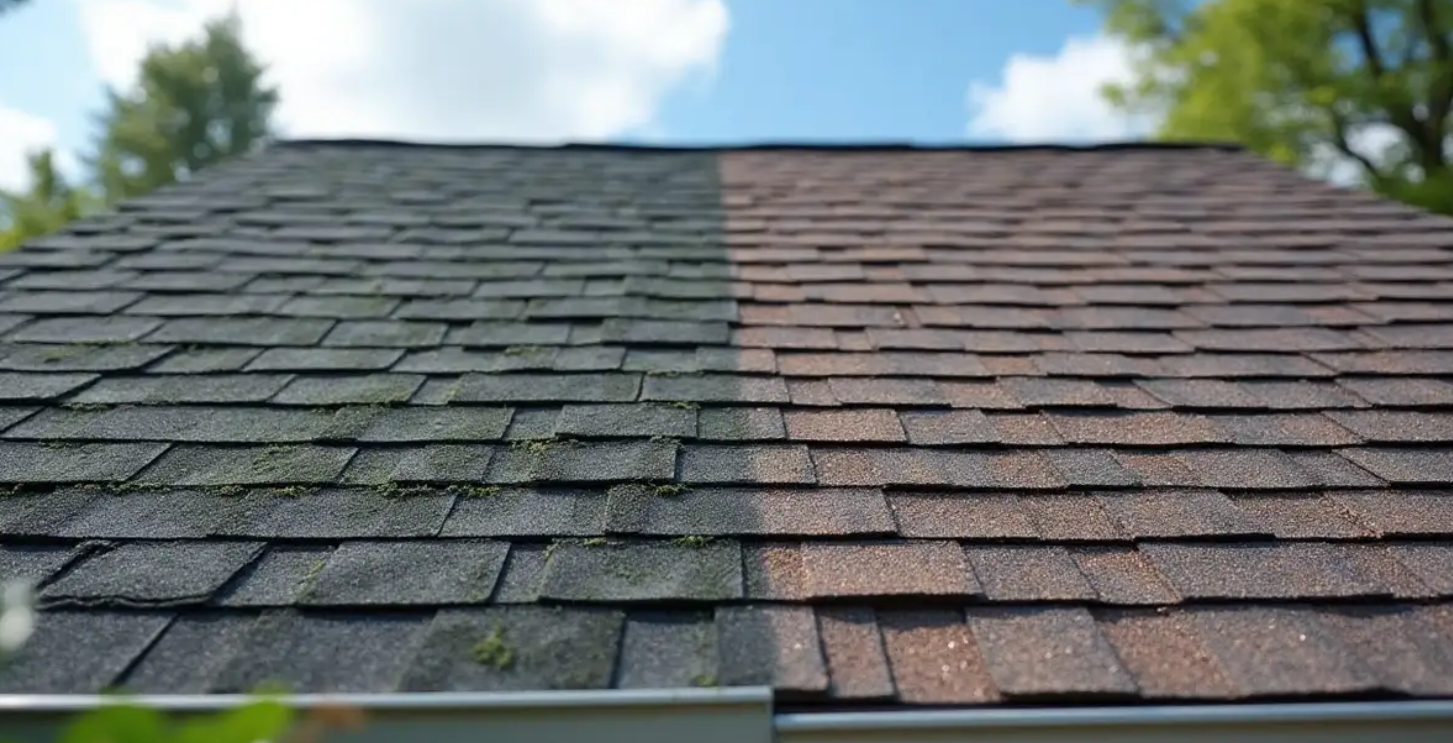
Cleaning the roof does not prevent algae from returning if underlying moisture conditions remain.
DIY methods like pressure washing or bleach solutions are strongly discouraged because they can:
-
Remove protective granules
-
Force water beneath shingles
-
Void warranties
-
Shorten roof lifespan
Professional soft-wash cleaning methods are typically safer and less damaging.
However, cleaning alone does not solve the root cause. Without improving drainage, ventilation, or installing preventative metal strips, algae will often reappear within a few years.
When Should You Call a Professional?
You should schedule a professional evaluation if you notice:
-
Heavy black streaking
-
Moss lifting shingles
-
Interior ceiling stains
-
Wood rot at roof edges
-
Persistent moisture in the attic
During a Knoxville home inspection, A+ Home Inspections evaluates roof surface conditions, flashing, ventilation, and visible structural components to determine whether staining is cosmetic or contributing to larger issues.
Cleaning, Repair, or Replacement?
The correct solution depends on:
-
Roof age
-
Extent of growth
-
Condition of shingles
-
Evidence of moisture intrusion
In many East Tennessee homes, algae is cosmetic. In older roofs, long-term moisture exposure may warrant repairs or replacement.
A professional inspection provides clarity before investing in cleaning or a new roof.
Schedule a Roof Evaluation in Knoxville & East Tennessee
If you are buying, selling, or maintaining a home in Knoxville or surrounding areas, roof condition should never be overlooked.
At A+ Home Inspections, we provide detailed, objective roof evaluations as part of our comprehensive home inspection services.
Understanding roof algae in East TN can help you avoid costly surprises tomorrow!